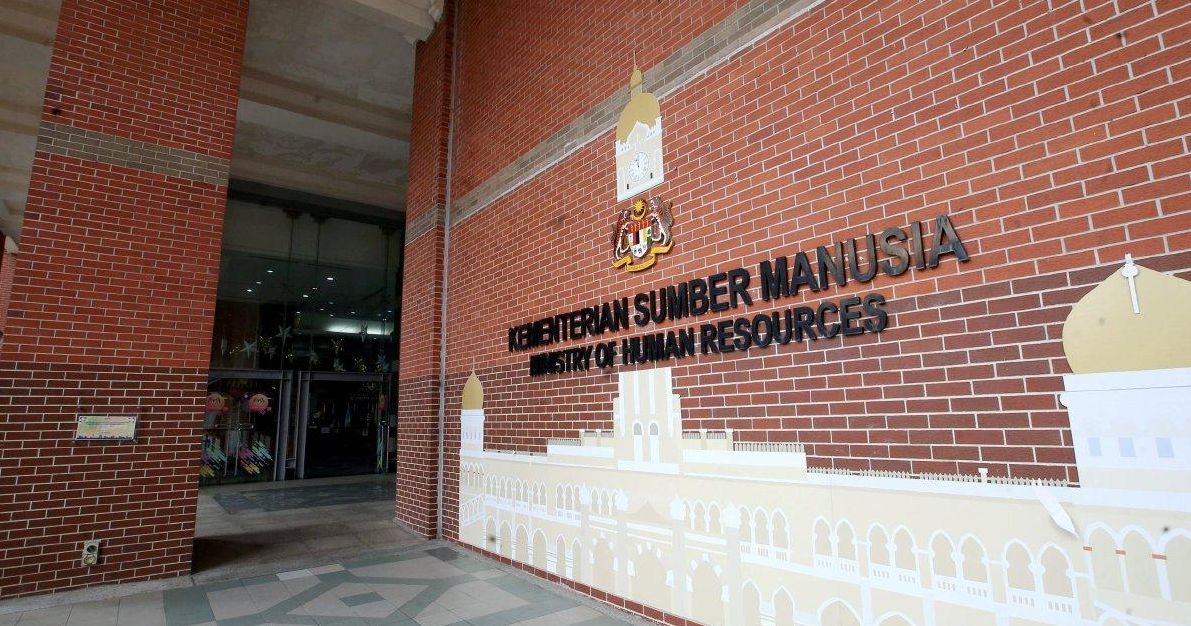
Once you start a company and hire employees, this is one ministry you will eventually deal with.
Many SME owners hear about the Malaysia Ministry of Human Resources, or KESUMA, and assume it only handles employee-related matters.
In reality, it is closely connected to the daily operations of a business.
Simply put, KESUMA covers areas such as:
👨💼 Employer and employee relations
📚 Employee training and skills development
🦺 Workplace safety
📋 Labour regulations
🔎 Employment and workforce development
🛡️ Employee social protection
Once your company starts hiring people, many parts of your business will gradually come into contact with this system.
🏢 4 Key Agencies SME Owners Should Know
1️⃣ JTKSM | Labour Department
JTKSM mainly deals with labour regulations, employer and employee rights, working arrangements, and employment-related matters.
For SMEs, once the number of employees grows, internal management can no longer rely only on verbal understanding.
Employment terms, working hours, employee rights, and company policies need to become clearer and more structured.
2️⃣ HRD Corp | Employee Training
This is particularly important for growing SMEs.
Companies that meet the relevant requirements may need to register with HRD Corp and contribute to the HRD Levy.
The important point is that this Levy can be used for employee training.
For example:
✅ Technician skills
✅ Supervisor training
✅ Management training
✅ On-the-Job Training
✅ Upskilling / Reskilling
In my view, many SMEs tend to overlook this area.
If your company is already contributing to the Levy, it is worth understanding what training programmes are available instead of leaving the resource unused.
3️⃣ DOSH / JKKP | Workplace Safety
If your business operates in:
🏭 Factory
📦 Warehouse
⚙️ Manufacturing
🔧 Engineering
then DOSH becomes especially important.
Machinery safety, employee operations, workplace conditions, safety training, and risk assessments may all fall under DOSH requirements.
For manufacturing companies, workplace safety should not only be addressed after the company becomes large.
It is better to build a proper system early.
4️⃣ PERKESO | Employee Social Protection
Once a company starts hiring employees, it also needs to understand PERKESO and the relevant social protection requirements.
PERKESO mainly provides protection for employees and also supports eligible individuals with employment assistance and training after job loss.
💡 Why Should SME Owners Understand These Agencies?
Imagine a manufacturing SME in Penang with:
👨🏭 25 employees
🏭 A production line
⚙️ Machinery and equipment
📈 Plans to expand
The company may eventually deal with:
HRD Corp → Employee Training
DOSH → Factory Safety
JTKSM → Labour Compliance
PERKESO → Employee Protection
This shows that human resources is not only the responsibility of the HR Department.
It is directly connected to:
Operations, employee productivity, safety, compliance, and future business expansion.
From my experience dealing with SMEs, one thing is very clear:
Many business owners understand their products, machinery, customers, and operations very well, but may not be as familiar with labour requirements and the business resources available to them.
When a company is small, this may not seem important.
But when the workforce grows from 5 people to 20, 50, or 100 employees, internal management becomes increasingly important.
📌 If you are a Malaysia SME owner, remember these four names:
JTKSM + HRD Corp + DOSH + PERKESO
As your company grows, there is a good chance you will deal with all of them.
If you enjoy content about Malaysia SMEs and Industrial Business, remember to Like ❤️ and Save 📌
#MalaysiaSME #MalaysiaBusiness #PenangBusiness #IndustrialMalaysia #KESUMA #HRDCorp #DOSH #JTKSM #PERKESO #Manufacturing